AI vs Manual Trading in 2026
Should you use AI or manual trading in 2026? I share my $3,400 loss, real trade examples, and the brutal pros and cons of AI vs manual trading for beginners.
Look, I’m not here to sell you some fairy tale about getting rich quickly. I’ve been trading since 2021, starting with a tiny $500 account on MetaTrader 4 through IC Markets. Blew it in two weeks. Classic beginner move—overleveraged on EUR/USD because I thought I was a genius after one lucky scalp.

Fast forward to early 2025. I’d built my account back to about $8,000, mostly grinding manual trades on forex pairs and some stocks. Then everyone started screaming about AI trading bots. “Emotionless profits!” “24/7 trading!” I got sucked in. Hard.
March 12, 2025. I connected StockHero to my Exness account. Deposited another $5,000 fresh capital because I didn’t want to risk my main stack. Set the bot to trade major forex pairs with its “conservative” preset strategy. Felt smart. Went to bed thinking I’d finally cracked it.
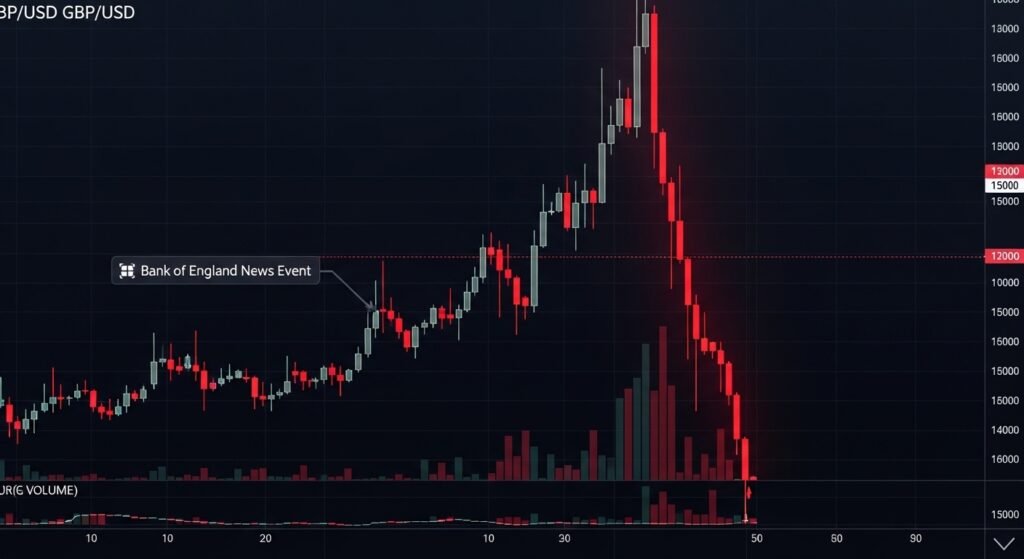
Woke up to a $3,400 hole. The bot had piled into multiple GBP/USD longs right before a surprise Bank of England rate cut rumor hit the wires. Price dumped 150 pips in hours. The bot didn’t care about news—it just followed its signals. Stop losses triggered one after another. I stared at the dashboard, hands literally shaking. Couldn’t sleep for two days.
That disaster forced me to go back to basics. Manual trading for months. And you know what? I made some of my best trades ever that year, but I also panic-sold winners and FOMO’d into losers. Both approaches kicked my ass in different ways.
So here’s the deal. If you’re a beginner stepping into markets in 2026, you’re probably wondering the same thing I was: Should I go full AI or stick to manual trading? This article breaks down the real pros and cons of AI vs manual trading for beginners in 2026—straight from someone who’s lost (and occasionally made) real money with both.
I’m not gonna sugarcoat it. Neither is perfect. Both can wreck you if you don’t know what you’re doing. But by the end, you’ll have a clear picture of what actually works for new traders like us.
(Quick side note: if you’re brand new, check out my article on risk management basics. Saved my account more times than I can count.)
What Even Is Manual Trading in 2026?
Manual trading hasn’t changed much. You open TradingView or MetaTrader 5, draw your lines, watch price action, read the news, and click buy or sell yourself. No bots. No algorithms doing the work. Just you, your charts, and your gut. And yeah, your emotions too.
I still do most of my trading manually. Why? Because after years, I trust my read on the market more than some black-box bot. But it took a lot of screen time to get there.
My First Big Manual Win (And Why It Felt So Good)

October 2023. I was still green. Saw a clean pin bar reversal on the USD/JPY daily chart at 148.80. BoJ was jawboning about intervention, but the price respected that level perfectly. I went short with 0.5 lots, risk 1% of my $3,000 account. Stop above the high at 149.30.
Price dropped straight to 146.20 over three days. Closed half at 147.50, moved stop to breakeven, let the rest run. Ended up banking $620. Not life-changing, but for a broke beginner? Felt like a million. That trade taught me that structure matters more than indicators. Something AI still struggles with sometimes.
What Is AI Trading in 2026?
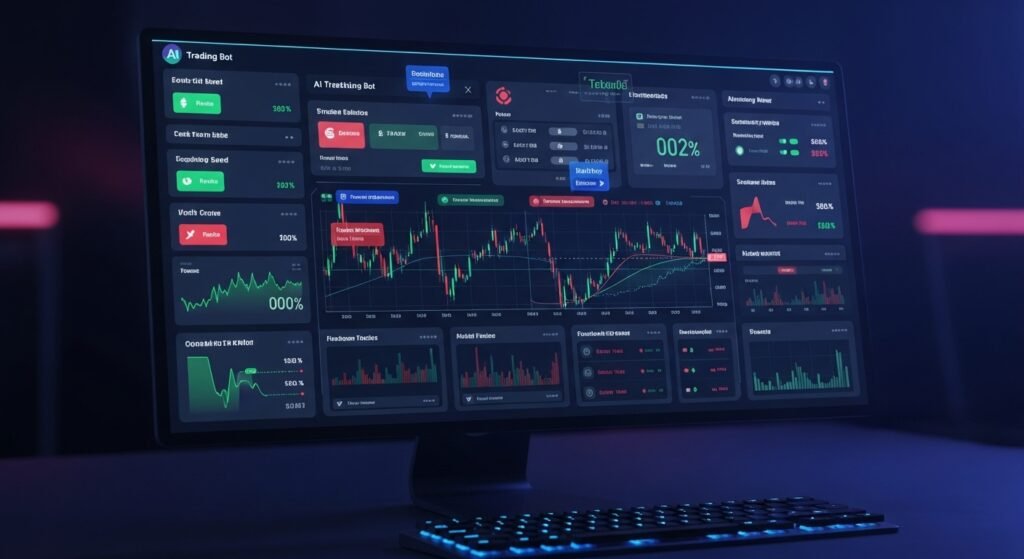
AI trading means letting software—bots, signals, or full automated systems—make or suggest trades. In 2026, it’s exploded. We’ve got Trade Ideas scanning stocks in real time, TrendSpider drawing trendlines automatically, and StockHero and Tickeron running full bots. Even broker platforms like cTrader now have built-in AI assistants.
Some use machine learning to predict moves. Others just execute predefined rules faster than you can blink. The fancy ones use LLMs to read news and sentiment. I’ve tried most of the popular ones. Some made money. Most didn’t—until I learned how to use them properly.
Pros of Manual Trading for Beginners
Here’s where manual shines.
You Actually Learn the Market
Biggest advantage? You’re forced to understand why prices move. Every trade teaches you something. When I first started using AI bots, I got lazy. Didn’t know why the bot entered. Just saw green or red P&L. Stopped growing as a trader. Manual forces your brain to connect dots. Support/resistance. Order flow. News impact. After hundreds of manual trades, patterns jump out at you.
Total Control and Flexibility
Market does something weird? You can exit early, adjust the stop, or sit on your hands. Bots usually can’t. January 2025 flash crash in Nasdaq after some AI-related news? My manual watchlist lets me avoid entering altogether. Bots, I know friends were running got smoked.
No Subscription Costs Eating Profits
Most good AI tools cost $50–$300/month. Manual? Just your broker spread and maybe TradingView Pro ($15/month). Early on, that matters when your account is small.
Cons of Manual Trading for Beginners
But here’s the catch—and it’s a big one.
Emotions Will Wreck You
Not gonna lie. I’ve panic-sold winners at breakeven because I couldn’t handle drawdown. I’ve revenge-traded after a loss and turned $200 red into $800 red in a day. FOMO is brutal manually. You see price flying, jump in late, and get stopped out. Classic.
Time Drain Is Real
Markets move 24/5 for forex, plus stocks. You can’t watch everything. I missed so many good setups because I had a day job. Burned out staring at charts all weekend.
Pros of AI Trading for Beginners in 2026
AI has come a long way. Here’s what it actually does well.
No Emotions—Pure Execution
Biggest win. Bots don’t FOMO. Don’t panic. Don’t revenge trade. My StockHero disaster was bad, but after fixing the settings and adding news filters, it delivered consistent small wins on ranging pairs.
24/7 Trading Without Burnout
Crypto never sleeps. Forex barely does. AI trades while you live your life. I ran a simple grid bot on Pionex for BTC/USD in late 2025. Made about 8% over two months while I barely looked at it.
Cons of AI Trading for Beginners in 2026
But it’s not magic. Far from it.
Black Swan Events Destroy Bots
My $3,400 GBP/USD loss? Classic example. Unexpected news. The bot didn’t care. Kept trading. 2025 had several flash crashes. AI bots that weren’t news-aware got absolutely rekt.
You Stop Learning
Worst part. You become a button-pusher. Don’t understand why trades win or lose. I went six months relying on a bot and forgot basic price action. Had to relearn everything.
My Experience: Side-by-Side Trade Examples
Let me show you real trades I took—same week, different approaches.
Manual Trade Example – November 2025
EUR/USD is approaching major resistance at 1.0950. Clear rejection candles on 4H. RSI overbought. Entered short at 1.0935, stop 1.0980 (45 pips risk), target 1.0820. Risked 1% on $10k account → $100 risk → 0.22 lots. Price dropped clean. Closed at 1.0830. +105 pips. $231 profit. Felt amazing. My analysis. My execution.
AI Trade Example – Same Week
Running Tickeron AI pattern recognition on stocks. Signaled long on NVDA after earnings beat. Bot entered at $118.50, stop $114, target $128. I let it run. Stock gapped up the next day. Closed +8%. $480 profit on the same position size. Zero effort. Slept through it.
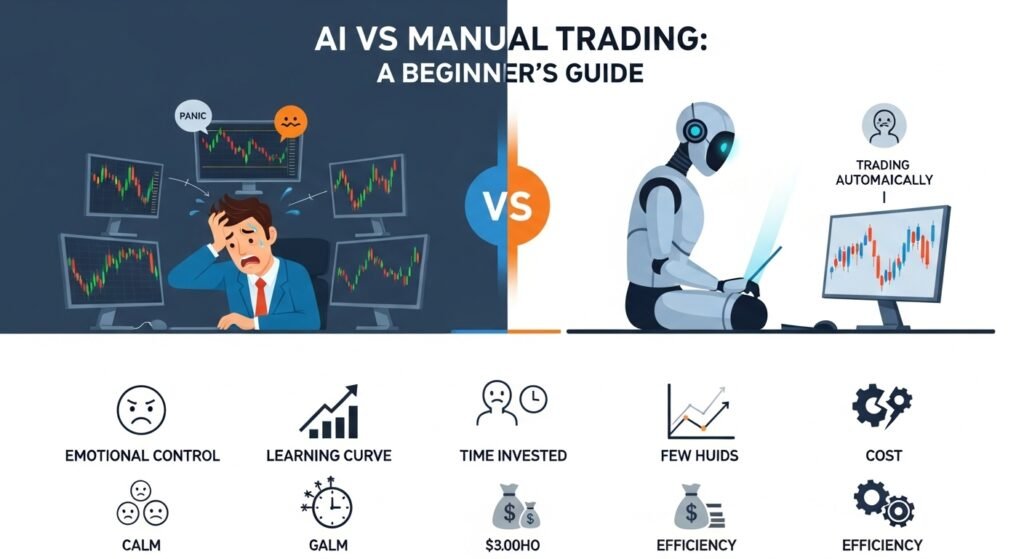
Comparison Table: AI vs Manual at a Glance
| Emotional Control | Terrible for beginners | Excellent |
| Learning Curve | Steep but valuable | Shallow but dangerous |
| Time Required | High | Low |
| Cost | Low (just platform) | Medium-High (subscriptions) |
| Adaptability to News | Good (if you’re watching) | Poor unless advanced filters |
| Consistency | Varies with mood/energy | High |
How Should a Beginner in 2026 Actually Start?
Here’s my honest advice. Start manual. Paper trade on TradingView for at least 3 months. Learn basic price action, support/resistance, and risk management. Once you’re profitable on demo, go live small. Then—and only then—add AI tools as assistants.
Never go full auto with real money until you understand the strategy inside out. I wish someone told me that in 2023. (If you want broker recommendations, check my review of the best forex brokers for beginners.)
My Current Approach: Hybrid
These days? I do both. Manual for high-conviction setups. AI for scanning and grinding small edges. Made my most consistent months in late 2025 doing this.
Look, the pros and cons of AI vs manual trading for beginners in 2026 aren’t about which one is “better.” They’re about which one fits your personality. If you’re impulsive, you need the discipline of a bot. If you’re a learner, you need the screen time of manual trading.
I’ve blown accounts both ways. I’ve had weeks where I felt like a king and weeks where I wanted to throw my laptop out the window. That’s the game.
Stay safe out there. Stick to 1% risk. Journal every trade. Learn from losses. That’s what turned me from a consistent loser to (mostly) consistent break-even to occasional profitable trader. You got this. Just don’t do what I did in March 2025.
For more on position sizing, check this guide. And if you’re into price action, here’s my favorite setups.
 Financial Disclaimer
 Financial Disclaimer
Risk Warning: Trading involves substantial risk of capital loss. This content serves educational purposes exclusively—not professional financial advice.
Important Notices:
1. I’m not a certified financial advisor, licensed broker, or investment professional.
2. My results (early blown accounts, $3,400 bot loss, and recent consistency) don’t predict your outcomes.
3. AI trading systems can fail dramatically during unexpected market events; manual trading is highly vulnerable to emotional decisions.
4. Only risk money you’re completely prepared to lose.
5. Before Trading: Practice extensively on demo accounts, start with tiny position sizes, and build experience gradually.
Additional Educational Disclaimer:
Any images, charts, screenshots, trade examples, lot sizes, account balances, prop firm names, broker names, profit or loss figures, dates, or trading scenarios shown in this content are purely illustrative and explanatory in nature.
These examples are used only to help readers better understand trading concepts, market behavior, risk management principles, and real-world decision-making situations. They are not presented as guarantees, promises, or claims of actual performance.
Some scenarios may be simplified, hypothetical, or based on personal experiences to make complex topics easier to understand and to help readers emotionally relate to common trading situations.
This content is published strictly for educational and informational purposes only. It should not be interpreted as financial advice, investment recommendations, signals, or solicitation to trade any financial instrument.
Trading outcomes vary from person to person based on experience, discipline, capital, market conditions, and risk tolerance. Always conduct your own research and consult qualified professionals before making financial decisions.
Consult licensed financial professionals before committing serious capital.
FAQ
1. Is AI trading better than manual trading for beginners in 2026?
Not straight away. AI removes emotions and trades 24/7, which sounds perfect. But most beginners don’t understand the strategies behind the bots. I lost big early with AI because I treated it like a magic box. Start manual to learn how markets actually work—price action, news impact, risk management. Once you’re consistently profitable on demo (3-6 months minimum), then test simple AI tools. A hybrid approach works best in the long term because it keeps your skills sharp while letting the bot handle the boring stuff.
2. What are the biggest risks of AI trading in 2026?
Unexpected news events and regime changes. My $3,400 GBP/USD loss happened because the bot ignored fundamental shifts. Flash crashes, geopolitical surprises—AI often keeps trading right through them unless you have very expensive news filters. Overoptimization is another killer: strategies that crush backtests often flop in live markets. Plus, costs—subscriptions eat small accounts. Never assume a bot is “set and forget.” You always need a manual override ready for when things get weird.
3. Can a complete beginner make money with AI bots in 2026?
It’s possible, but unlikely to last without preparation. Tools like RockFlow or StockHero are beginner-friendly, but you still need basic knowledge—position sizing, risk per trade, and when to turn the bot off. I’ve seen newbies deposit $1,000, run a bot, make 10% quick, then lose it all on the next drawdown because they didn’t understand max drawdown. If you don’t know the bot’s strategy, you’re just gambling with a fancy interface. Start on the demo.
4. How much does AI trading cost in 2026?
It adds up fast. TradingView Pro is around $15/month. TrendSpider starts at around $39/month. Trade Ideas Premium can hit $200+. StockHero marketplace bots vary—some are free, others are $50-100/month. Plus, you might need a VPS if you’re running EAs on MT5, which is another $20/month. For small accounts under $5k, these costs can kill your actual profitability. Manual trading is basically free, aside from spreads, which is why I recommend it for the first year.
5. Should I go full automated or stay manual?
Neither extreme is ideal for a beginner. Fully automated is dangerous because you stop learning and become dependent on software you don’t understand. A full manual can burn you out, and your emotions will eventually wreck a good setup. I currently do about 70% manual discretionary trading for big moves and 30% AI-assisted scanning and grid bots for ranging markets. This keeps me engaged but reduces the “chart fatigue” that leads to bad decisions.
Thanks For The Reading!

Why And How Crypto Market Crash In 2026: What Really Happened To My Account
Why And How the Crypto Market Crash In 2026 February 6, 2026. Bitcoin had already been cut almost in half

The Eighth Wonder of the World for Real Traders
How Compounding: The Eighth Wonder of the World Nearly Broke Me Before It Saved Me January 2022. I wired exactly
What Is Arbitrage Trading & Safe Platforms 2026
Introduction Man, January 10th, 2026. 2:15 AM PKT. I’m staring at my TradingView screen in Hyderabad, hands shaking, heart pounding.
What Is P2P Trading & How to Avoid Scams in 2026
P2P Trading Discover what P2P trading is and how to be safe from scams in 2026. Real trader stories, PKR
Centralized vs Decentralized Exchanges Explained (CEX vs DEX) a complete guide for beginner in 2026
Centralized vs Decentralized Exchanges Explained (CEX vs DEX) In my opinion, I need to be frank with you about my

What Is a Crypto Wallet? Types, Risks & Safety Tips in 2026
The Night I Got Wrecked By My “Safe” Crypto Wallet Confused about crypto wallets and scared of getting hacked? I