My $14,200 Wake-Up Call: Finding the Top 10 Exchanges in 2026

January 14, 2026. 3:15 AM. I was sitting in my home office, the only light coming from three curved monitors displaying a sea of red candles. My hands were literally shaking. I’d just watched my account balance on a “tier-2” exchange vanish. Not because of a bad trade—though I’ve had plenty of those—but because the platform froze during a high-volatility flash crash. I couldn’t close my position. I couldn’t even log in. By the time the site came back up, my $14,200 long position on Solana had been liquidated.
It felt like a physical punch to the gut. I felt sick. I’d spent months grinding for those gains, and they were gone in forty minutes because I chose a shitty platform. That was the day I realized that your strategy doesn’t mean a damn thing if your exchange fails you.
Since that disaster, I’ve spent the last year testing every major platform. I’m not talking about reading the “About Us” pages. I’m talking about putting my own hard-earned money into them, trading through news events, and dealing with their customer support when things go south. In this article, I’m going to break down the top 10 exchanges that actually deserve your capital in 2026. I’m going to be brutally honest about which ones are actually built for traders and which ones are just hype machines waiting to wreck you.
If you’re tired of getting slipped on your entries or paying insane fees, listen up. Here is my personal list of the top 10 exchanges that I actually trust with my money today. For more on how I manage my risk after disasters like these, check out my guide to surviving market crashes.

1. Binance: Still the Undisputed Heavyweight?
Look, I’ve had a love-hate relationship with Binance for years. But here’s the thing: in 2026, they are still the king for a reason. Their liquidity is just unmatched. When I’m trying to exit a large position on an altcoin at 2:00 AM, I need to know there’s someone on the other side of that trade.
My Experience with Binance
I remember back in mid-2025, I was trading a news breakout on BNB. I had a $50,000 position open. On any other exchange, the slippage would have eaten 2% of my profit. On Binance? I filled almost exactly at my target price. It’s that deep liquidity that keeps me coming back. But it’s not all sunshine. Their KYC process has become a total nightmare lately. It took me three days just to update my address because their AI facial recognition kept glitching.
What Went Wrong: Early in my career, I kept all my funds on the Binance hot wallet. Big mistake. I didn’t get hacked, but my account was “frozen for review” for 48 hours during a massive Bitcoin pump. I missed out on at least $3,000 in potential gains because I couldn’t move my funds to the futures wallet. Lesson learned: keep your trading capital separate from your long-term holdings.
2. Bybit: The Professional’s Playground
If you’re serious about leverage, Bybit is usually where you end up. I moved a significant chunk of my portfolio here after the “Binance Freeze” incident. Their UI is just… cleaner. It feels like it was designed by people who actually trade, not just by developers.
Why It Made the Top 10 Exchanges List
- Zero Latency: Even when the market is moving 10% in an hour, the charts don’t lag.
- Copy Trading: I actually tried their copy trading feature with $1,000 last month. I ended up losing $150 because the “pro” I followed FOMO’d into a meme coin, but the tech itself worked perfectly.
3. OKX: The King of On-Chain Integration
OKX has climbed the ranks of the top 10 exchanges by mastering the bridge between CEX (Centralized) and DEX (Decentralized). Their Web3 wallet, in my opinion, is the best in the business right now.
I use OKX specifically when I want to jump between spot trading and DeFi yield farming. Last Tuesday, I moved 5 ETH from my trading account to a liquid staking protocol within their app in about three clicks. No more copying and pasting long hex addresses and praying I didn’t miss a digit. That peace of mind is worth the slightly higher taker fees.
4. MEXC: The High-Risk, High-Reward Gem
Not gonna lie, MEXC is where I go when I want to gamble on “moonshots.” If a coin is trending on Twitter, it’s probably already listed on MEXC.
Mistakes I Made: I once bought $2,000 worth of a micro-cap AI coin on MEXC at 4:00 AM. I was tired, emotional, and chasing a win after a losing streak. The coin doubled in price in two hours. I was ecstatic. Then, I tried to sell. The liquidity was so thin that my sell order crashed the price by 15%. I barely broke even.
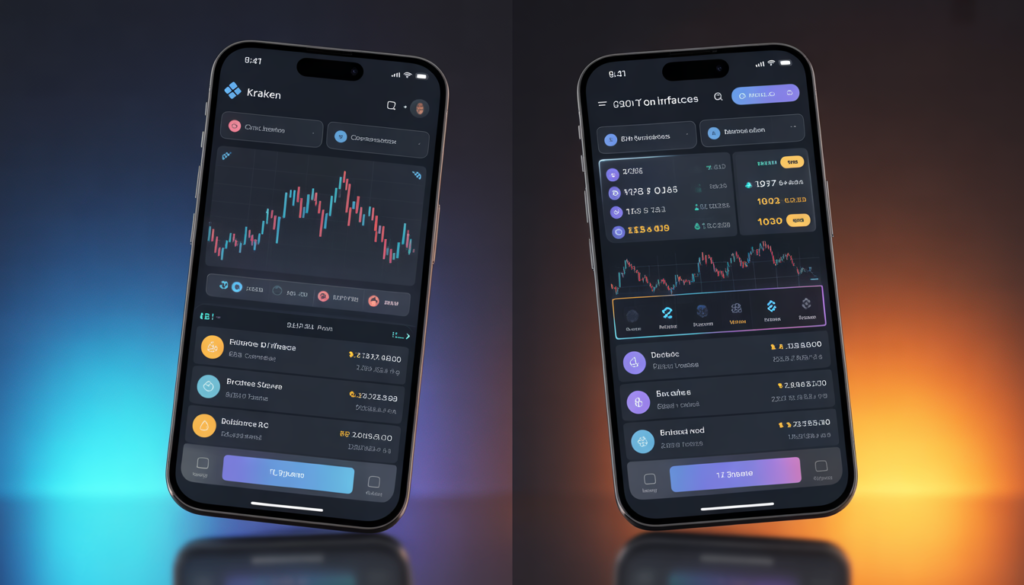
5. Kraken: The Fort Knox of Crypto
If security is your #1 priority, Kraken is your home. I’ve used them since 2019, and they are the only exchange that hasn’t given me a single heart attack regarding my funds. Their “Proof of Reserves” is the gold standard.
| Security History | Clean since day 1 | Multiple “incidents” |
| Support | Real humans (mostly) | AI bots that loop |
| Listing Speed | Slow (vetted) | Fast (anything goes) |
6. KuCoin: The “People’s Exchange.”
KuCoin makes the top 10 exchanges list because of its sheer variety. They have bots for everything. I currently have a “Grid Trading” bot running on the BTC/USDT pair. It’s not making me a millionaire, but it’s pulling in about $15 a day in passive income while the market moves sideways. It’s a nice way to pay for my coffee while I wait for a real setup.
7. Gate.io: The Altcoin Jungle
Gate.io is like a massive warehouse. It’s not pretty, the UI is a bit cluttered, and sometimes the translations are weird. But they have everything. If you can’t find a coin on the other nine platforms on this list, it’s here. I keep a small “degen” fund here for tokens that aren’t yet on the mainstream radar. For more on finding these early gems, see my post on low-cap coin research.
8. Coinbase International: For the Institutional Feel
I don’t use the standard Coinbase app anymore—the fees are just robbery. But Coinbase International? That’s a different story. It’s built for perpetual futures, and it’s incredibly stable. I use this for my “safe” trades—the ones where I’m using low leverage and want maximum regulatory protection.
9. Bitget: The Rising Star
Bitget has spent a fortune on marketing in 2025 and 2026, but the product actually backs it up. Their integration with TradingView is what sold me. I can execute my trades directly from my TradingView charts without switching tabs. When you’re scalping 1-minute timeframes, those 3 seconds you save switching apps can be the difference between a $200 win and a $100 loss.

10. Crypto.com (Exchange): The Ecosystem Play
I only use the Crypto.com exchange because I use their Visa card. The integration is seamless. I can sell my BTC for USD and top up my card instantly to pay for dinner. It’s practical. Is it the best for hardcore day trading? Probably not. But for the “lifestyle” trader, it’s a solid entry in the top 10 exchanges.
My Personal Trading Framework for 2026

You know what’s funny? Most people think choosing an exchange is just about the lowest fees. That’s how I thought before the $14,200 Solana disaster. Now, I have a “Three-Bucket” system.
- The Trading Bucket: Funds I actively trade with on Bybit and Binance. I never keep more than 30% of my net worth here.
- The Deployed Bucket: Funds in OKX or KuCoin running bots or staking.
- The Cold Bucket: The “never touch” money in a hardware wallet.
Position Sizing Example
Don’t be like 2024-me. I used to just “ape” in. Now, I actually do the math.
- Account Size: $10,000
- Risk per trade: 1% ($100)
- Entry: $60,000 (BTC)
- Stop Loss: $58,500
- Distance to Stop: $1,500 (2.5%)
- Position Size: $4,000 (or 0.066 BTC)
If I hit my stop, I only lose $100. My hands don’t shake anymore because I know exactly what I’m risking. Most of the top 10 exchanges now have built-in calculators for this, so there’s no excuse for blowing your account.
Conclusion: The Honest Truth
Look, there is no “perfect” exchange. Every single one of these top 10 exchanges has a flaw. Binance is a KYC headache, MEXC can be illiquid, and Kraken is slow to list new coins. The secret isn’t finding the perfect platform; it’s using the right tool for the right job.
I use Binance for my main trading, Bybit for leverage, and Kraken for peace of mind. If you’re just starting out, don’t overthink it. Pick one of the top three, keep your position sizes small, and for the love of God, don’t keep your entire life savings on any of them. I learned that the hard way, so you don’t have to.
If you want to see exactly how I set up my charts on these platforms, check out my TradingView setup guide or read my latest market outlook for 2026.
Stay safe out there. The market doesn’t care about your feelings, but your exchange should at least keep your funds safe.
 Financial Disclaimer
 Financial Disclaimer
Risk Warning: Crypto trading involves substantial risk of capital loss. This content serves educational purposes exclusively—not professional financial advice.
Important Notices:
- I’m not a certified financial advisor, licensed broker, or investment professional.
- My results (including my $14,200 loss and subsequent recovery) don’t predict your outcomes.
- Cryptocurrency exchanges can fail, get hacked, or face regulatory shutdowns.
- Only risk money you’re completely prepared to lose.
- Before Trading: Practice on a demo account, start with small amounts, and learn the basics of technical analysis.
Additional Educational Disclaimer:
Any images, charts, screenshots, trade examples, lot sizes, account balances, prop firm names, broker names, profit or loss figures, dates, or trading scenarios shown in this content are purely illustrative and explanatory in nature.
These examples are used only to help readers better understand trading concepts, market behavior, risk management principles, and real-world decision-making situations. They are not presented as guarantees, promises, or claims of actual performance.
Some scenarios may be simplified, hypothetical, or based on personal experiences to make complex topics easier to understand and to help readers emotionally relate to common trading situations.
This content is published strictly for educational and informational purposes only. It should not be interpreted as financial advice, investment recommendations, signals, or solicitation to trade any financial instrument.
Trading outcomes vary from person to person based on experience, discipline, capital, market conditions, and risk tolerance. Always conduct your own research and consult qualified professionals before making financial decisions.
Consult licensed financial professionals before committing serious capital.
FAQ: Everything You’re Afraid to Ask About Exchanges
1. Which exchange has the absolute lowest fees in 2026?
Right now, MEXC and Bitget are leading the pack with extremely low or even zero-fee spot trading promotions. However, you have to look at the “spread.” A platform might claim zero fees but have a wide gap between the buy and sell price, meaning you actually pay more to enter the trade. Personally, I don’t mind paying a 0.1% fee on Binance because I know I’m getting a fair market price. Don’t be “penny-wise and pound-foolish.”
2. Is it safe to leave my money on these top 10 exchanges?
Short answer: No. Long answer: It’s fine for your active trading capital, but anything you plan to hold for more than a month should be in a cold storage wallet like a Ledger or Trezor. Even the best exchanges can face “liquidity crunches.” I lost money when a smaller exchange went bust in 2023, and it took me 2 years to get even 10% back through legal channels. Don’t trust; verify.

3. Do I really need to do KYC?
In 2026, if you want to use a reputable exchange with high withdrawal limits, yes. The days of “no-KYC” major exchanges are mostly over. If you find an exchange that doesn’t ask for ID but handles millions in volume, be very careful. Usually, that’s a red flag for a platform that might get shut down by regulators overnight. I’ve accepted it as part of the game now.
4. Why did my stop loss not trigger during a crash?
This is the most frustrating thing in trading. During a massive dump, the exchange’s “matching engine” gets overloaded. If there are no buyers at your stop price, your order won’t fill. This is why I rank Binance and Bybit so high—their engines are built to handle that stress better than most. Always use “Market” stops instead of “Limit” stops if you want to be sure you get out, even if the price is slightly worse.
5. Can I use a VPN to access exchanges not available in my country?
You can, but it’s a massive risk. I know a guy who used a VPN to trade on a restricted platform; he made $5,000, tried to withdraw, and the exchange flagged his IP. They froze his account and asked for proof of residency. He couldn’t provide it, and his money is still stuck there. It’s not worth the stress. Just stick to the legal platforms in your jurisdiction.
Thanks For The Reading!

Why And How Crypto Market Crash In 2026: What Really Happened To My Account
Why And How the Crypto Market Crash In 2026 February 6, 2026. Bitcoin had already been cut almost in half

The Eighth Wonder of the World for Real Traders
How Compounding: The Eighth Wonder of the World Nearly Broke Me Before It Saved Me January 2022. I wired exactly
What Is Arbitrage Trading & Safe Platforms 2026
Introduction Man, January 10th, 2026. 2:15 AM PKT. I’m staring at my TradingView screen in Hyderabad, hands shaking, heart pounding.
What Is P2P Trading & How to Avoid Scams in 2026
P2P Trading Discover what P2P trading is and how to be safe from scams in 2026. Real trader stories, PKR
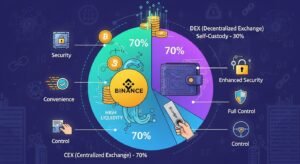
Centralized vs Decentralized Exchanges Explained (CEX vs DEX) a complete guide for beginner in 2026
Centralized vs Decentralized Exchanges Explained (CEX vs DEX) In my opinion, I need to be frank with you about my

What Is a Crypto Wallet? Types, Risks & Safety Tips in 2026
The Night I Got Wrecked By My “Safe” Crypto Wallet Confused about crypto wallets and scared of getting hacked? I