
Why And How the Crypto Market Crash In 2026
February 6, 2026. Bitcoin had already been cut almost in half from its insane six‑figure peak, and I was still trying to “buy the dip” like a hero.
That morning around 9:40 AM my time, I watched my Binance futures account go from around 11,850 USDT equity to 6,190 USDT in less than three hours. Total beating.

Look, I’ve traded through some ugly stuff: the 2021–2022 crash after FTX blew up, the 2024 “mini winter”, that weird 2025 choppy phase where everyone on X kept calling for “new ATH soon”.
But this 2026 move? It felt different. It wasn’t just one coin rugging; it was liquidity vanishing across the board while big players dumped and hedges got liquidated everywhere.
You know what happened next? Spreads widened, books got thin, and every leveraged ape (including me) who was late got wrecked.
Here’s the thing: the headlines were screaming about “crypto winter”, institutional outflows, and hedge funds blowing up on crazy options plays tied to Bitcoin ETFs.
But on my screen, it was much simpler: liquidation cascades, forced selling, and that sick feeling when your stop doesn’t get filled where you expected.
That day, I panic‑reduced size on a BTC long at 71,380, watched price wick to 72,100, and then nuke to 65,200 in under an hour while my hands literally shook.
In this article, I’m going to walk you through why and how crypto market crash in 2026 unfolded, the bigger forces that crushed the market, and exactly how it translated into real‑life losses on my side of the screen.
I’ll show you the macro triggers, the leverage time‑bomb, the regulation overhang, and the mistakes I made with entries, position sizing, and risk.
If you’re new to this and don’t want to blow your first serious account, or if you’ve already taken hits in 2026, this is for you.
If you’re still trying to understand market cycles, you might also want to check out the broader bear market breakdown I’ve shared on traderss.site about surviving long drawdowns and protecting capital during prolonged downtrends.
What Triggered The 2026 Crypto Crash?
So what actually caused this whole thing to unravel in 2026, after Bitcoin spent 2025 flirting with ridiculous valuations above 100k and total crypto market cap flirting with 3 trillion?
It wasn’t one simple reason. It was a pile of dry tinder, plus one nasty spark.
Here’s what was sitting under the surface before things snapped:
- Huge institutional positioning in spot and ETF products, with flows starting to reverse as macro conditions shifted.
- Leveraged strategies tied to Bitcoin ETFs and complex options, especially from funds using carry trades and cheaper foreign funding.
- Retail traders over‑exposed with high leverage after a euphoric 2025 bull run and the narrative of “institutional adoption forever”.
- Tightening liquidity and growing fears about a broader risk‑asset drawdown across stocks, tech, and even the supposed “safe havens”.
When those pieces lined up, it only took a few bad days to flip the mood from “we’re going to 200k” to “is this another FTX moment?”.
The ETF And Hedge Fund Domino
You’ve probably seen the theory by now: some aggressive funds went ultra‑leveraged on Bitcoin ETF options, betting hard on a rebound that never really arrived.
These guys were playing with out‑of‑the‑money call options, funded through Yen carry trades and other cheap borrowing strategies, assuming volatility would work in their favor.
When the math stopped working and volatility moved the wrong way, margin calls kicked in, their positions got liquidated, and they were forced to dump ETF shares and underlying exposure.
That created sudden selling pressure on Bitcoin itself, which then rippled through the entire crypto market like a shockwave.

Institutional Outflows And Liquidity Vacuum
At the same time, big institutional players started stepping back.
ETF outflows picked up, spot desks saw less buy‑side support, and liquidity on major exchanges thinned out right when volatility was exploding.
When that happens, every sell order pushes price further than it “should”, and stop orders become fuel for more downside.
By early February 2026, analysts were openly calling it an “existential crisis” for Bitcoin’s current cycle, with some even warning that we could be facing a brutal, extended bear phase.
And honestly, watching candles slice straight through levels that held for months, it felt exactly like that from my chair.
Macro Headwinds: Why Risk Assets Got Smacked
Want to know the worst part?
Crypto didn’t crash in a vacuum. It crashed while macro was turning against all risk assets at once.

- Concerns about a global slowdown and a post‑inflation “deflationary” phase made analysts warn that 2026 could be rough for stocks, commodities, and crypto.
- Rising gold prices were flashing red as a warning that investors were rotating out of risk and looking for safety.
- Equity markets were stretched near record highs, with a lot of people whispering about an AI bubble and over‑valuation.
When macro turns like that, Bitcoin stops acting like some magical “uncorrelated hedge” and starts behaving like what it currently is: a high‑beta risk asset heavily owned by funds and speculators.
So when they de‑risk, crypto gets hit first and hardest.
I ignored that.
Big mistake.
Regulation Clouds And Confidence Shocks
Here’s the thing: during 2025, regulation didn’t exactly disappear.
It just became more structured, more serious, and more coordinated globally.
- Travel Rule implementations expanded, forcing more transparency on virtual asset service providers.
- Major jurisdictions shifted from pure “enforcement‑by‑surprise” to building actual frameworks, but with heavy compliance requirements.
- Lending, staking, and DeFi activities came under tighter scrutiny, reducing some of the wild‑west yield opportunities and leverage pockets.
On paper, that sounds good long‑term. But short‑term, you get:
- Platforms exiting markets.
- Some products being restricted, re‑designed, or de‑leveraged.
- Less easy leverage and lower “juicy” yields, which removes a ton of speculative capital.
Combine that with lingering scars from past scandals like FTX and other blow‑ups, and you get a market that’s structurally more fragile when stress hits.
Confidence is everything in crypto.
Once confidence cracks, price follows.
How The 2026 Crash Showed Up On My Screen
Let me show you how why and how crypto market crash in 2026 turned into real losses for me.
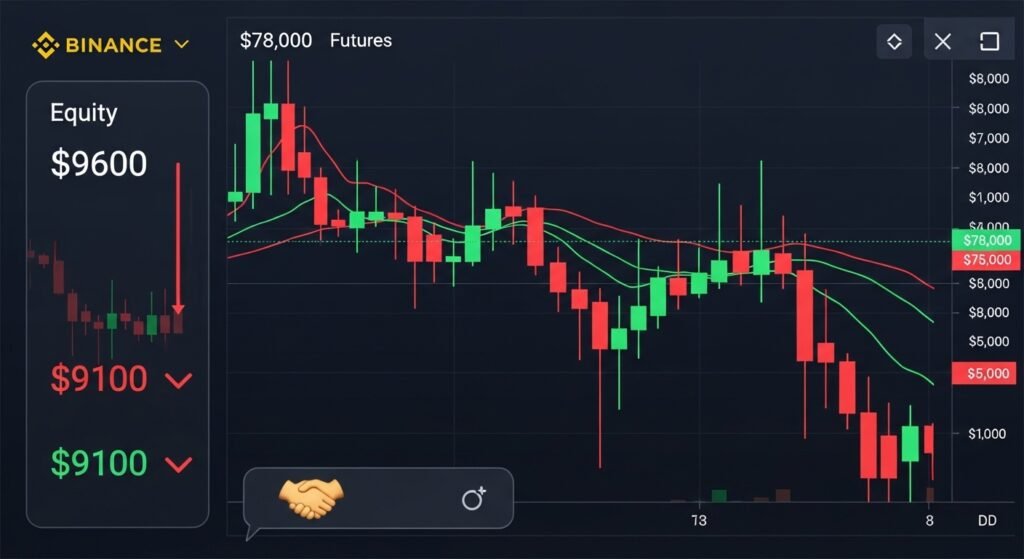
On February 3, 2026, I opened a BTC perpetual futures long at 78,420 with 5x leverage on Binance, thinking we’d bounce off a prior support region.
Account equity: roughly 9,600 USDT. Risk per trade: I thought it was around 2%, but I didn’t fully factor in slippage and volatility.
Here’s how that trade looked in simple numbers:
| Item | Value |
|---|---|
| Entry price | 78,420 USDT per BTC |
| Account equity | 9,600 USDT |
| Position size | 0.61 BTC (approx) |
| Notional exposure | ~47,836 USDT |
| Leverage | 5x |
| Initial stop (planned) | 75,800 |
| Planned risk | ~1,600 USDT (≈16.7%) |
| Actual filled stop level | 75,150 (slippage) |
| Actual loss | ~2,000+ USDT |
This is where I got it wrong:
- I sized off a rough % risk in my head, not a carefully calculated amount per trade.
- I underestimated how wide stops needed to be in a fast, thin market.
- I assumed that liquidity would behave like previous months when volatility was calmer.
So when Bitcoin flushed hard through 77k, 76k, and straight into mid‑75k, my stop slipped, the order filled worse than expected, and the loss ended up closer to 21% of my account on one idea.
Not gonna lie. That one hurt.
What Went Wrong In My Trading During The Crash
Guess what happened next?
Instead of stepping back and cooling off, I did what a lot of traders do in a crash. I tried to make it back. Fast.
Mistake 1: FOMO Entries In A Falling Market
I started “buying the dip” every time BTC bounced 2–3% intraday, without respecting the larger trend or the macro situation.
I FOMO’d into an ETH long around 3,920 after seeing it bounce from 3,700 twice, only for it to flush to 3,450 while I was still stubbornly holding.
Emotion over structure. Revenge over plan.
Mistake 2: Over‑Leverage And Tight Stops
Because I wanted to claw losses back quickly, I increased leverage to 7–10x on some altcoin positions while still trading in the middle of the crash.
Tight stops plus thin liquidity equals repeated stop‑outs and death by a thousand cuts.
Example: I opened a SOL long at 142 with 8x leverage, 3% stop.
Price wick hunted me out at 137.8, then ripped to 151 within a few hours while I just stared at the chart feeling sick.
Mistake 3: Ignoring The Bigger Cycle
I knew from previous cycles and plenty of analysis that major tops are often followed by brutal, extended bear markets where rallies are made to be sold, not chased.
But I treated early 2026 like a normal correction that would quickly go back to new highs.
Analysts had already been warning about:
- Potential drawdowns back towards prior major supports.
- The possibility of Bitcoin revisiting much lower levels as part of a larger cycle reset.
I saw those warnings.
I just thought I’d be the one who timed the bottom.
Why And How Crypto Market Crash In 2026 On A Bigger Level
Let’s zoom out from my screw‑ups for a second and look at the structure of this whole move.
Because if you understand the underlying mechanics, you won’t be as shocked when the next one hits.
Cycles, Halvings, And The Inevitable Hangover
Bitcoin has always moved in powerful cycles, often tied to its halving events and post‑halving euphoria.
We had:
- Rapid run‑ups to new all‑time highs.
- Massive inflows as the ETF narrative and institutional adoption went mainstream.
- An environment where people started thinking “this time is different” and that we might avoid a brutal bear.
But the cycle structure didn’t magically disappear.
Analysts were already mapping scenarios where Bitcoin could retrace deep, even back towards earlier key levels, by 2026.
So the 2026 crash is part of that long, ugly hangover after a euphoric bull run.
Leverage Plus Liquidity Equals Cascade
When you mix:
- High leverage (retail and institutional).
- Complex derivative structures that can unwind violently.
- Thinner liquidity as big players step back.
You don’t just get a “correction”.
You get a cascade. Liquidations on top of liquidations, where each forced sale pushes price down into the next cluster of stops.
That’s how crypto market crash in 2026 unfolded mechanically: cascading forced selling, especially around ETF‑linked strategies and over‑leveraged players.

My Experience: One Week Inside The 2026 Crash
You know what really sticks with me from that first week of February 2026?
It’s not any single trade. It’s the emotional whiplash.
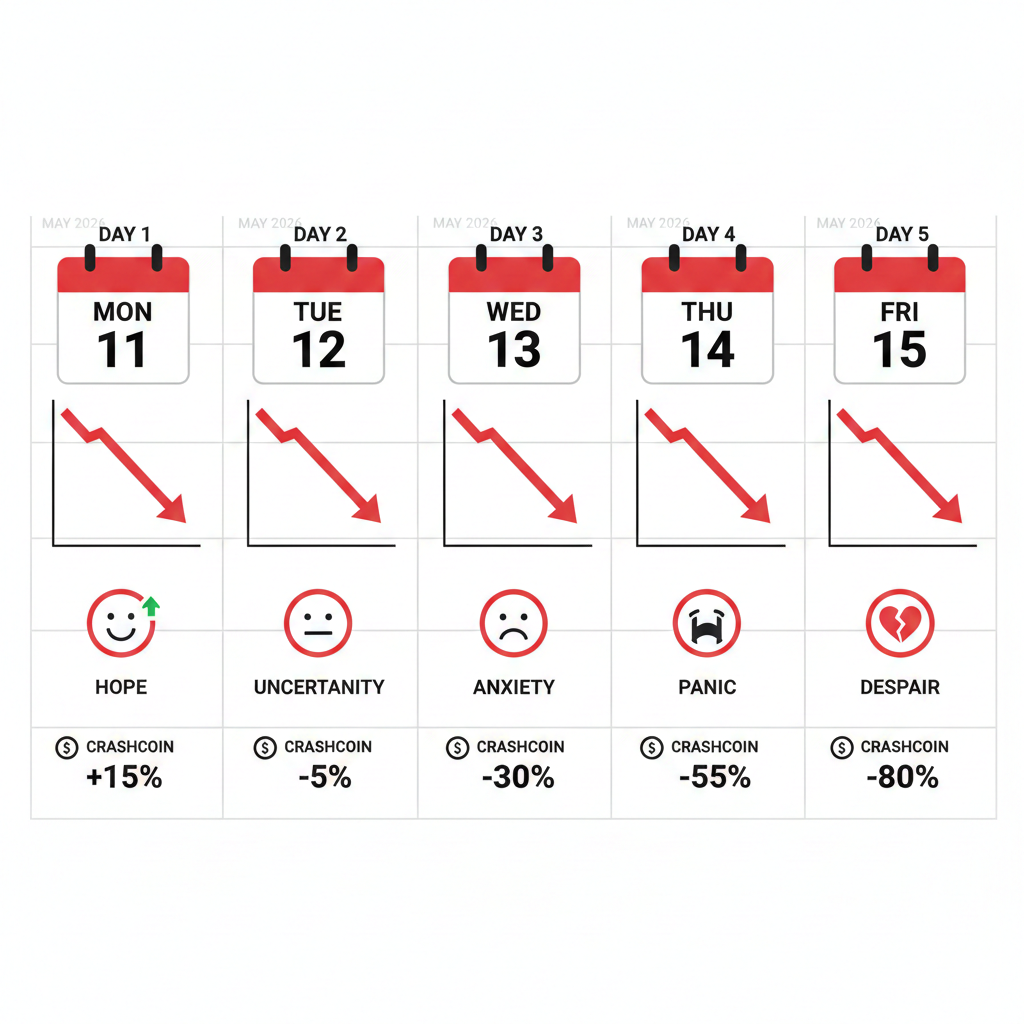
Day‑By‑Day Snapshot
- Day 1: “This is just a sharp pullback; I’ll buy the dip.”
- Day 2: “Okay, that hurt, but the bounce is coming; can’t miss it.”
- Day 3: “Why are my stops slipping? Why is every bounce weaker?”
- Day 4: “I need to reduce size, but I also need to make this loss back.”
- Day 5: “I should’ve just sat out. I’m trading like a complete idiot.”
I had positions on BTC, ETH, SOL, and a couple of smaller alts.
The worst hit was a BTC + ETH combination where both legs went against me at the same time, taking roughly 3,400 USDT from my account in under 48 hours.
Hands shaking. Couldn’t sleep properly. Checking charts in the middle of the night.
If you’ve never gone through a proper crypto crash with real money on the line, you might think this is just numbers.
It isn’t. It’s emotional warfare.
Practical Risk Management In A Crash
So, how would I handle it differently now?
Here’s how I’m structuring things after getting punched in the face by why and how crypto market crash in 2026.
Position Sizing Framework
Let’s say your account is 5,000 USDT.
- Max risk per trade in a crash environment: 0.5–1% (25–50 USDT).
- Max open trades: 2–3 carefully chosen setups, not 8 different casino tickets.
- Max total exposure: no more than 2–3x account size in notional leverage during chaotic periods.
Example calculation:
- Account: 5,000 USDT
- Risk per trade: 1% = 50 USDT
- BTC entry: 70,000
- Stop: 68,600 (1,400 difference)
Position size = Risk / (Entry − Stop)
= 50 / 1,400 ≈ 0.0357 BTC
Notional = 0.0357 × 70,000 ≈ 2,499 USDT
If you’re using 3x leverage, that’s still manageable.
But if you crank that to 10x with the same stop? You’re playing Russian roulette with slippage and liquidation levels.
Risk Management Checklist For Crash Conditions
When volatility explodes and headlines look scary:
- Cut your usual size in half (or more).
- Widen your stops to realistic levels and reduce leverage to compensate.
- Avoid stacking correlated positions (BTC, ETH, top alts all in the same direction).
- Decide your maximum loss per day and hard‑stop your trading when you hit it.
- Don’t chase every bounce; accept you’ll miss some profitable moves.
It sounds boring.
But boring is exactly what you need when the market is trying to drag you into emotional chaos.
Spot vs Futures vs Altcoins During The Crash
Different instruments behaved very differently during the 2026 crash.
Some gave you room to survive. Others were just straight death traps.
How They Stacked Up For Me
| Type | Pros During Crash | Cons During Crash |
|---|---|---|
| Spot BTC/ETH | No liquidation risk, easier to hold long‑term. | Big drawdowns, painful to watch, tying up capital. |
| Perp Futures | Flexible leverage, can short as well as long. | Liquidation risk, slippage, funding swings. |
| Small‑cap alts | Occasional violent bounces for scalps. | Illiquidity, huge gaps, brutal dumps. |
| ETF exposure | Easy access via traditional accounts. | Tied to bigger institutional flows and unwinds. |
I found that:
- Spot positions were emotionally heavy but survivable as long as size was sane.
- Futures were insanely tempting but deadly when over‑leveraged.
- Alts were mostly just noise unless you were scalping with strict rules.
If you’re building something sustainable after seeing why and how crypto market crash in 2026 unfold, you probably want a core spot approach plus rare, carefully managed futures positions—rather than running high leverage as your default.
Strategy Adjustments I’m Making After The 2026 Crash
You know what I took away from this whole mess?
I don’t need to catch every big move. I just need to stay in the game.
Rules I’m Putting In Place
- No more than 3x leverage on majors, 1–2x effective exposure on alts.
- Max 1–1.5% risk per idea, even in “perfect” setups.
- Automatic trading pause after 3 consecutive losing days.
- Scheduled review days where I don’t open new positions, only analyze.
On top of that, I’m paying more attention to macro and regulatory context, not just chart patterns:
- Watching for signs of institutional outflows and ETF behavior.
- Keeping an eye on regulatory announcements that could impact liquidity or product availability.
- Treating euphoric narratives (“this time is different”, “no more bears”) as red flags instead of comfort.
If you want deeper breakdowns on managing risk and structuring positions, traderss.site has other pieces on risk frameworks and portfolio sizing that pair well with this crash post‑mortem.
What This Crash Means For The Future
So, what does why and how crypto market crash in 2026 mean for where we go next?
Analysts are split.
Some think Bitcoin could keep grinding lower or stay choppy for 6–12 months as the bear cycle plays out.
Others think we’re closer to the later stages of the drawdown and that long‑term holders will eventually get rewarded again.
What I know is this:
- Cycles haven’t disappeared.
- Leverage still makes and breaks traders.
- Macro and regulation now matter more than ever.
For me, this crash forced me to stop pretending I could out‑trade every storm with size and stubbornness.
Now it’s about survival, cleaner setups, and respecting the bigger forces that can move the market against me no matter how right I feel.
Conclusion: My Honest Take On Why And How Crypto Market Crash In 2026
If you strip away the noise, why and how crypto market crash in 2026 comes down to a few brutal truths.
We had an over‑extended bull cycle, over‑leveraged players, a more fragile liquidity environment, and a macro backdrop that turned hostile to risk assets at exactly the wrong time.
On my side of the screen, that translated into:
- Over‑sized positions.
- Underestimated volatility.
- Emotional decisions made inside cascading liquidation events.
I’m not going to pretend this was a “learning experience” that felt good.
It sucked. It exposed every weakness in my risk management and every blind spot in how I looked at macro and regulation.
But here’s the thing: the market will always offer another cycle, another trend, another opportunity.
Your job, my job, is to still have capital—and a clear head—when that opportunity appears.
If you take anything from my story, let it be this: don’t wait for a 2026‑style crash to force you into respecting risk.
Build that respect now, while you still have money and emotional bandwidth left.
For more on how I’m restructuring my long‑term approach after this crash, and how I’m thinking about the next cycles, I’ve shared additional frameworks on traderss.site that go deeper into portfolio allocation and cycle mapping.

Financial Disclaimer
Risk Warning: Crypto trading and investing involves substantial risk of capital loss. This content serves educational purposes exclusively—not professional financial advice.
Important Notices:
I’m not a certified financial advisor, licensed broker, or investment professional.
My results (including both profitable periods and significant drawdowns during the 2026 crash) don’t predict your outcomes.
Crypto assets can experience extreme volatility, deep drawdowns, exchange failures, liquidity crises, regulatory shocks, and total loss of value.
Only risk money you’re completely prepared to lose.
Before Trading: Practice on demo accounts, start with small position sizes, test your strategy in different market conditions, and make sure you fully understand leverage and liquidation mechanics.
Additional Educational Disclaimer:
Any images, charts, screenshots, trade examples, lot sizes, account balances, prop firm names, broker names, profit or loss figures, dates, or trading scenarios shown in this content are purely illustrative and explanatory in nature.
These examples are used only to help readers better understand trading concepts, market behavior, risk management principles, and real-world decision-making situations. They are not presented as guarantees, promises, or claims of actual performance.
Some scenarios may be simplified, hypothetical, or based on personal experiences to make complex topics easier to understand and to help readers emotionally relate to common trading situations.
This content is published strictly for educational and informational purposes only. It should not be interpreted as financial advice, investment recommendations, signals, or solicitation to trade any financial instrument.
Consult licensed financial professionals before committing serious capital.
FAQ Section
1. Why did the crypto market crash so hard in 2026?
The 2026 crash wasn’t caused by one single event. It was a combination of over‑extended prices after a massive bull run, growing institutional outflows, aggressive leveraged positions tied to Bitcoin ETFs, and a macro environment turning against risk assets.
As some hedge funds using complex options and carry trades started to unravel, forced liquidations added huge selling pressure, which then cascaded through the market as more stops and margin calls were hit.
At the same time, fears of a tougher year for global markets made big players less willing to step in as buyers, so liquidity dried up right when volatility exploded, amplifying every move to the downside.
2. Was the 2026 crypto crash different from the 2021–2022 crashes?
Yes and no. Just like 2021–2022, the 2026 crash involved over‑leverage, a painful reset after euphoric highs, and a lot of retail traders getting caught at the top.
But 2026 was different because the market structure had evolved: there were major Bitcoin ETFs, deeper institutional participation, and more complex derivatives linking crypto to broader financial markets.
So when things started to break, it wasn’t only retail liquidations on offshore exchanges; it also involved institutional products, cross‑asset strategies, and global macro shifts that made the whole move feel more like a systemic risk‑off event.
3. How can a small trader survive a crash like 2026?
The main edge a small trader has is flexibility. You’re not forced to stay fully invested, and you don’t have to justify every move to investors or a committee.
To survive a crash like 2026, you need strict risk rules: small % risk per trade, limited leverage, and clear daily or weekly loss limits so you don’t spiral into revenge trading. You also need to be willing to sit in cash when conditions are chaotic instead of trying to catch every bottom. Focusing on spot positions or very moderate leverage, avoiding over‑exposure to correlated coins, and treating crashes as times to protect capital—not chase glory—can keep you in the game for the next cycle.
4. Is it smart to buy during a massive crypto crash?
It can be, but only with the right mindset and structure. Historically, deep crypto crashes have eventually been followed by new cycles, but that doesn’t mean every coin recovers or that timing the bottom is easy.
If you’re buying into a crash, it’s usually better to spread entries over time (DCA), size smaller than usual, and focus on assets with stronger long‑term narratives and liquidity rather than speculative micro‑caps. You also need to accept that price can fall much further than you expect and stay depressed for months, so money you deploy during crashes should be cash you truly don’t need in the short term.
5. What role did regulation play in the 2026 crash?
Regulation didn’t “cause” the crash directly, but it shaped the environment it happened in.
Throughout 2025, global regulators moved toward more structured frameworks for crypto: stricter compliance for exchanges and service providers, broader application of Travel Rule standards, and more scrutiny on lending, staking, and DeFi activities.
That reduced some of the wild leverage and easy yield opportunities that had previously pumped speculative capital into the space. When the market turned, this more constrained environment meant fewer easy pathways for risk‑on behavior and less willingness from institutions to ignore regulatory and macro risks, contributing to the overall fragility of the market.
6. Will Bitcoin and major cryptos recover after the 2026 crash?
No one can guarantee that, but looking at past cycles, major drawdowns have eventually been followed by recoveries and new highs—though the timeline can be long and painful.
Analysts have mapped scenarios where Bitcoin could spend 6–12 months in a choppy or bearish environment before stabilizing, especially if macro remains challenging and institutional flows are cautious.
If recovery happens, it’s likely to reward patient, well‑positioned participants rather than people chasing every short‑term bounce with high leverage, so your approach and risk management will matter more than your ability to “call the bottom”.
7. Should I still use leverage after seeing what happened in 2026?
Leverage isn’t evil, but it’s extremely unforgiving, especially in conditions like the 2026 crash where liquidity is thin and volatility is explosive.
If you’re going to use leverage at all, it should be modest, with clear position sizing, wide but logical stops, and a strong understanding of liquidation levels. High leverage (10x, 20x, or more) combined with emotional trading and uncertain macro is basically asking to get wiped out.
Many traders—including me—have shifted toward lower leverage or even unleveraged spot positions as their core approach after seeing how quickly strong accounts can be blown up in a crash environment.
Thanks For The Reading!

Why And How Crypto Market Crash In 2026: What Really Happened To My Account
Why And How the Crypto Market Crash In 2026 February 6, 2026. Bitcoin had already been cut almost in half

The Eighth Wonder of the World for Real Traders
How Compounding: The Eighth Wonder of the World Nearly Broke Me Before It Saved Me January 2022. I wired exactly
What Is Arbitrage Trading & Safe Platforms 2026
Introduction Man, January 10th, 2026. 2:15 AM PKT. I’m staring at my TradingView screen in Hyderabad, hands shaking, heart pounding.

What Is P2P Trading & How to Avoid Scams in 2026
P2P Trading Discover what P2P trading is and how to be safe from scams in 2026. Real trader stories, PKR

Centralized vs Decentralized Exchanges Explained (CEX vs DEX) a complete guide for beginner in 2026
Centralized vs Decentralized Exchanges Explained (CEX vs DEX) In my opinion, I need to be frank with you about my

What Is a Crypto Wallet? Types, Risks & Safety Tips in 2026
The Night I Got Wrecked By My “Safe” Crypto Wallet Confused about crypto wallets and scared of getting hacked? I